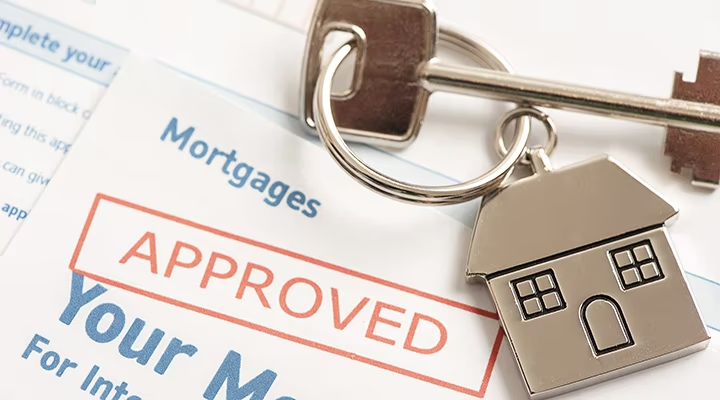
Buying a home is one of the biggest financial decisions most people will ever make. Because property prices are high, many buyers rely on mortgage loans to finance their homes. A mortgage allows individuals to purchase real estate by borrowing money from a lender and repaying it over time with interest.
Understanding how mortgage loans work can help you make smarter financial decisions, avoid costly mistakes, and choose the best loan for your situation.
In this comprehensive guide, we will explain what mortgage loans are, how they work, the different types available, interest rates, approval requirements, and tips to get the best mortgage deal.
What Is a Mortgage Loan?
A mortgage loan is a long-term loan used to purchase or refinance real estate. The property itself serves as collateral for the loan, which means the lender can take ownership of the property if the borrower fails to repay the loan.
Mortgage loans are offered by banks, credit unions, and financial institutions such as Wells Fargo, Bank of America, and JPMorgan Chase.
A mortgage typically includes the following components:
- Loan amount (principal)
- Interest rate
- Loan term
- Monthly payments
Mortgage terms often range between 15 and 30 years, making them one of the longest financial commitments people undertake.
How Mortgage Loans Work
When you take out a mortgage loan, the lender provides funds to buy a property. In return, you agree to repay the loan in monthly installments.
Your monthly mortgage payment typically includes four components known as PITI:
- Principal – The portion that reduces the loan balance
- Interest – The cost of borrowing money
- Taxes – Property taxes charged by local governments
- Insurance – Homeowner’s insurance protecting the property
Over time, a larger portion of your monthly payment goes toward reducing the principal rather than paying interest.
Types of Mortgage Loans
There are several types of mortgage loans available depending on your financial situation.
Fixed-Rate Mortgage
A fixed-rate mortgage keeps the same interest rate throughout the entire loan term.
Common loan terms include:
- 15 years
- 20 years
- 30 years
Advantages
- Predictable monthly payments
- Protection against rising interest rates
- Long-term financial stability
Disadvantages
- Higher initial interest rates compared to adjustable loans
Adjustable-Rate Mortgage (ARM)
An adjustable-rate mortgage starts with a lower interest rate that changes periodically based on market conditions.
Common structures include:
- 5/1 ARM
- 7/1 ARM
- 10/1 ARM
This means the interest rate stays fixed for the first few years before adjusting annually.
Advantages
- Lower starting interest rates
- Lower initial monthly payments
Disadvantages
- Payments may increase if interest rates rise
FHA Loans
Loans backed by the Federal Housing Administration are designed to help first-time homebuyers.
Key features include:
- Lower credit score requirements
- Smaller down payments
- Government insurance for lenders
These loans are popular among buyers with limited savings.
VA Loans
VA loans are available to military service members and veterans through the U.S. Department of Veterans Affairs.
Benefits include:
- No down payment
- Competitive interest rates
- No private mortgage insurance
Jumbo Loans
A jumbo loan is used to finance expensive properties that exceed the limits set by government-sponsored entities such as Fannie Mae and Freddie Mac.
These loans usually require:
- Higher credit scores
- Larger down payments
- Strong financial documentation
Mortgage Interest Rates
Mortgage interest rates determine how much you will pay over the life of your loan.
Interest rates depend on several factors:
- Credit score
- Down payment size
- Loan term
- Economic conditions
- Inflation
Central banks such as the Federal Reserve influence interest rates through monetary policy.
Even a small difference in interest rates can significantly affect total loan costs.
Down Payment Requirements
The down payment is the upfront amount you pay when purchasing a home.
Typical down payment ranges:
- 3% to 5% for some government-backed loans
- 10% to 20% for conventional loans
- 20% or more to avoid private mortgage insurance
A larger down payment reduces your loan amount and monthly payments.
Private Mortgage Insurance (PMI)
If your down payment is less than 20%, lenders may require private mortgage insurance (PMI).
PMI protects the lender in case the borrower defaults on the loan.
Although PMI increases monthly payments, it allows buyers to purchase homes with smaller down payments.
Mortgage Approval Process
Getting approved for a mortgage requires several steps.
1. Pre-Approval
Before house hunting, buyers often apply for mortgage pre-approval.
This process evaluates:
- Income
- Credit score
- Debt-to-income ratio
- Employment history
Pre-approval helps determine how much you can afford.
2. Home Search
Once pre-approved, buyers search for homes within their budget.
3. Loan Application
After choosing a property, buyers submit a formal mortgage application.
Lenders review financial documents including:
- Tax returns
- Bank statements
- Pay stubs
4. Home Appraisal
The lender orders an appraisal to confirm the property’s value.
5. Loan Closing
Once approved, the buyer signs legal documents and receives the mortgage funds.
Mortgage Refinancing
Refinancing replaces your existing mortgage with a new loan, usually to obtain better terms.
Common reasons for refinancing include:
- Lower interest rates
- Reduced monthly payments
- Shorter loan terms
- Access to home equity
Refinancing can save thousands of dollars over time.
Common Mortgage Mistakes
Many first-time buyers make costly mortgage mistakes.
Buying More House Than You Can Afford
Just because a lender approves a certain amount does not mean you should borrow the maximum.
Ignoring Additional Costs
Homeownership includes additional expenses such as:
- Maintenance
- Property taxes
- Insurance
- Utilities
Not Comparing Lenders
Different lenders may offer significantly different mortgage terms.
Tips for Getting the Best Mortgage
To secure the best mortgage loan:
- Improve your credit score before applying
- Save for a larger down payment
- Compare multiple lenders
- Choose a loan term that fits your financial goals
- Avoid large new debts before applying
These steps can help reduce borrowing costs.
Mortgage Loans and Long-Term Wealth
Homeownership plays a major role in wealth building. Paying down a mortgage gradually increases home equity, which represents the portion of the property you truly own.
Over time, property values may increase, allowing homeowners to build wealth through real estate appreciation.
However, buying a home should always be part of a balanced financial strategy that includes savings and investments.
Final Thoughts
Mortgage loans allow millions of people to achieve the dream of homeownership. By understanding how mortgages work, the types available, and how interest rates affect loan costs, borrowers can make smarter financial decisions.
Whether you choose a fixed-rate mortgage, an adjustable-rate mortgage, or a government-backed loan, the key is to carefully evaluate your financial situation and choose the option that best supports your long-term goals.
With proper planning, a mortgage can become a powerful tool for building financial stability and long-term wealth.
